History of Harold Parker State Forest
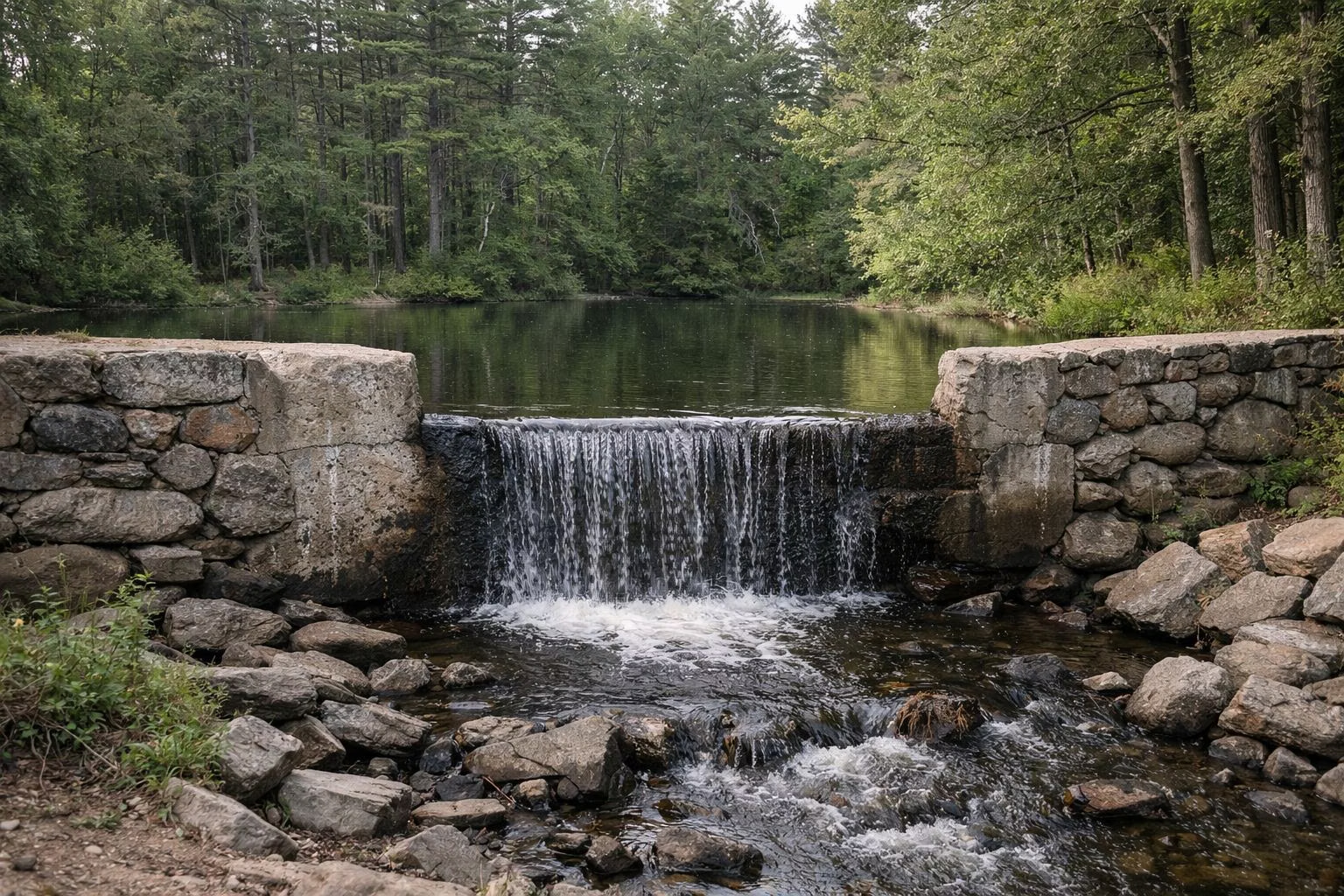
Harold Parker State Forest was created in 1916, when the State Forest Commission bought about 800 acres of cut-over, fire-scarred land in Andover, North Andover and Reading and named it for its first chairman, Harold Parker, who had died that year. Most of the roads, dams, ponds and buildings you use today were built in the 1930s by state work crews and two Civilian Conservation Corps camps.
Harold Parker History at a Glance
Before the State Forest
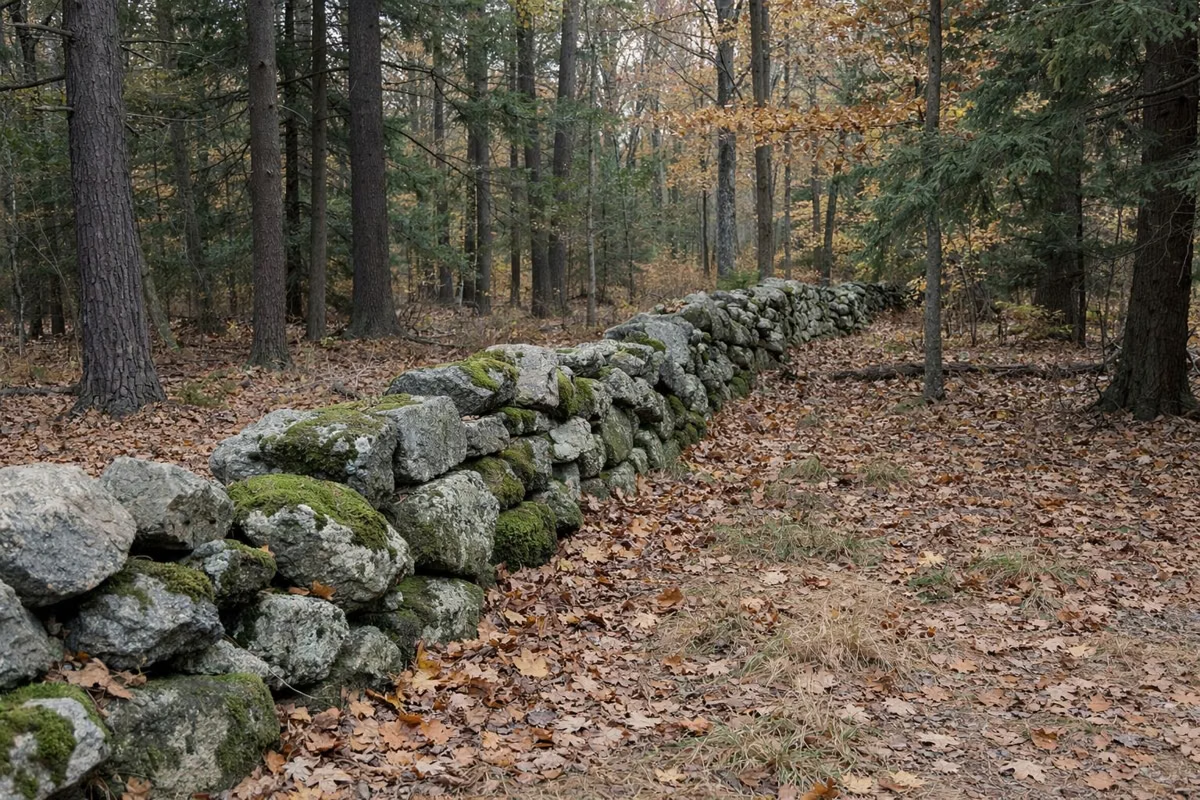
DCR's 2013 management plan for the forest traces the land's use back through farms, mills and a quarry. English farmers settled the area around 1650. In 1758 the Jenkins family bought a 400-acre parcel on what is now Jenkins Road. By the early 1800s many local farms were being abandoned for better soils farther west, and the land left in forest was cut hard for white pine in the late 1800s and early 1900s.
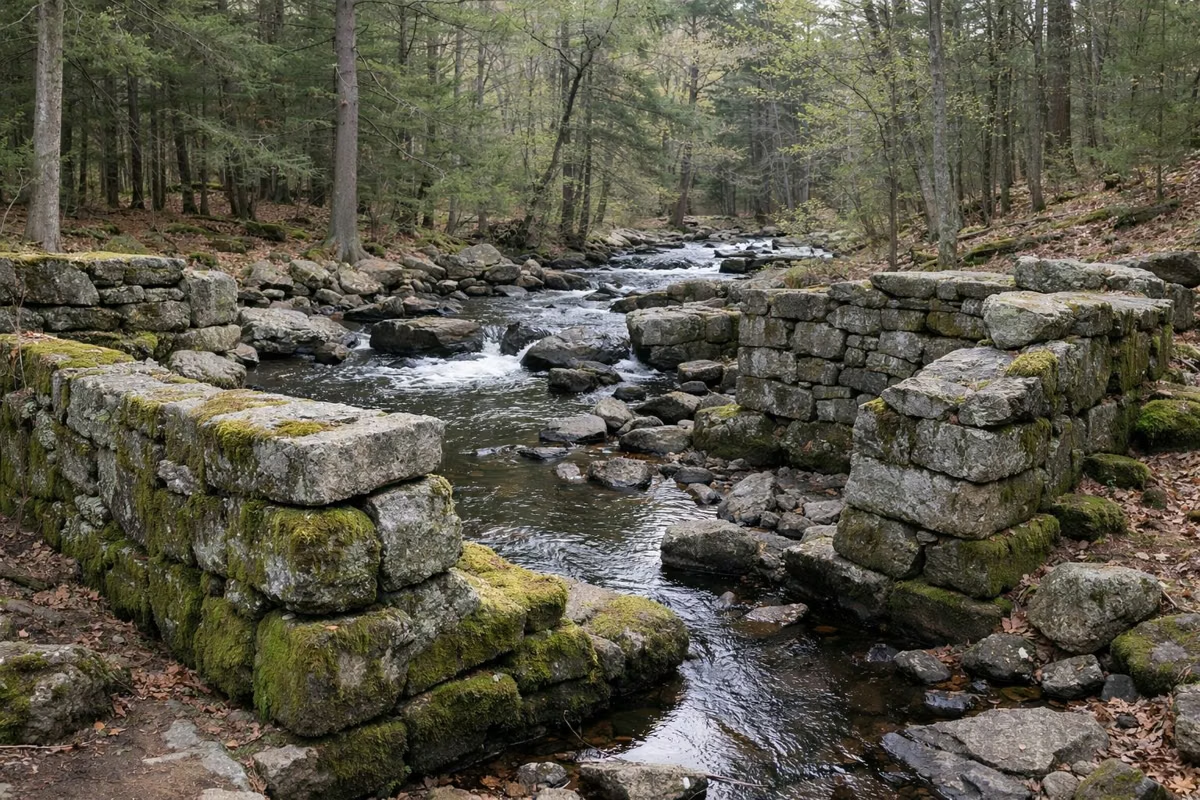
Two industries left marks you can still find. A blue soapstone quarry operated west of Jenkins Road from 1836 into the 1840s. The soft stone was cut for door and window moldings, sinks and fireplace mantels. In the 1850s William Jenkins built a sawmill on a branch of the Skug River nearby, and it ran until 1895. The Andover Village Improvement Society, which owns the next-door Skug River Reservation, notes that Jenkins was also an abolitionist whose house on Jenkins Road was a station on the Underground Railroad.
In 1895 a forest fire swept the area. DCR's plan says the cutting, grazing and fire left the land in a "waste land" condition, which is exactly the kind of land the state was then buying.
The 1916 Purchase and the Name
Under a state law of the time, the State Forest Commission could buy waste land for no more than $5 an acre and replant it. Its first chairman, from 1914 to 1916, was Harold Parker, a civil engineer who had chaired the State Highway Commission. He died suddenly in 1916. That year the commission acquired about 800 acres in Andover, North Andover and Reading and named the new forest in his memory. A three-man crew was hired to start replanting right away. Most of the forest was assembled between 1915 and 1938.
The CCC Years
In the 1930s, DCR's plan says, crews of 30 to 80 unemployed men hired by the state repaired forest roads, tended tree plantations and fought gypsy moth and white pine weevil. Then the federal Civilian Conservation Corps arrived with two camps:
- Camp S-5 (1933 to 1935), west of Bradford Pond. Its crews built dams, about four miles of roads and four bridges along the Skug River, creating Delano, Brackett, Collins, Field and Frye Ponds, plus a beach, picnic area and three parking lots at Field Pond.
- Camp S-76, Company 167 (1934 to 1941), northeast of Frye Pond. Its 200 men built park roads and parking lots, swimming and picnic areas at Berry and Stearns Ponds, camping areas at Berry Pond and Lorraine Park, the forest headquarters buildings, picnic pavilions, bathhouses and comfort stations. They also planted trees and cleaned up after the hurricane of 1938.
That is why DCR describes most of the forest's original dams, roads, recreation areas and trails as CCC work, and why nine of the forest's 11 ponds are man-made. The pavilion at Berry Pond is the CCC pavilion named in the plan. See the ponds for which pond is which.
War, Decline and Recovery
From 1941 to 1945 wartime shortages cut maintenance and attendance, and DCR's plan says the Berry Pond and Lorraine Park recreation areas closed, with only Stearns Pond staying open. In 1946 the CCC camp buildings were sold for lumber. Demand for outdoor recreation jumped right after the war, and by 1950 new comfort stations had been built and Lorraine Park reopened. In 1955 more comfort stations went in at Stearns Pond, Sudden Pond and the Lorraine Park Campground, which still runs today. See camping.
Historic Sites to Look For
DCR's project summary lists the Jenkins Mill and Soapstone Quarry as historic sites, along with seven Native American sites and "numerous" CCC dams, roads, trails and buildings. The mill site sits west of Jenkins Road near the Bay Circuit Trail and is marked on DCR's trail map. The plan describes a dam and pond, the mill foundation with an intact wheel pit, stone walls and stone-lined waterways. The Friends of Harold Parker's description of the CCC Trail passes the mill site and a glacial erratic on the way east. Details are on trails and hiking.
The Forest Today
DCR's park page describes a Central Hardwood, Hemlock and White Pine forest with 35 miles of trails, 11 ponds and dozens of campsites. The 2013 management plan, adopted by the DCR Stewardship Council on March 1, 2013, counts 56 certified vernal pools in Harold Parker (105 across Harold Parker and neighboring Boxford State Forest) and seven state-listed rare species across the two forests, and sets 77 recommendations for balancing protection with recreation. Boxford State Forest is managed with it as one planning unit.
History FAQ
Who was Harold Parker?
Harold Parker was a civil engineer who chaired the State Highway Commission and then served as the first chairman of the Massachusetts State Forest Commission from 1914 to 1916. He died suddenly in 1916, and the commission named its newly bought forest in Andover and North Andover after him.
When was Harold Parker State Forest established?
In 1916. DCR's management plan says the State Forest Commission bought about 800 acres in Andover, North Andover and Reading that year. Most of the forest was assembled between 1915 and 1938.
Did the CCC build Harold Parker State Forest?
Much of it. Two Civilian Conservation Corps camps worked there in the 1930s: Camp S-5 built dams that created Delano, Brackett, Collins, Field and Frye Ponds, and Camp S-76 built roads, the headquarters, pavilions, bathhouses and the swimming and camping areas.
Are the ponds at Harold Parker natural?
Mostly not. DCR counts 11 ponds, two natural and nine man-made, and most of the dams were built by state crews and the CCC in the 1930s.
Is there a soapstone quarry at Harold Parker?
Yes, the site of one. A blue soapstone quarry operated west of Jenkins Road from 1836 into the 1840s, and DCR lists the Soapstone Quarry and the nearby Jenkins Mill as historic sites in the forest.